Plasma Concentration Studies

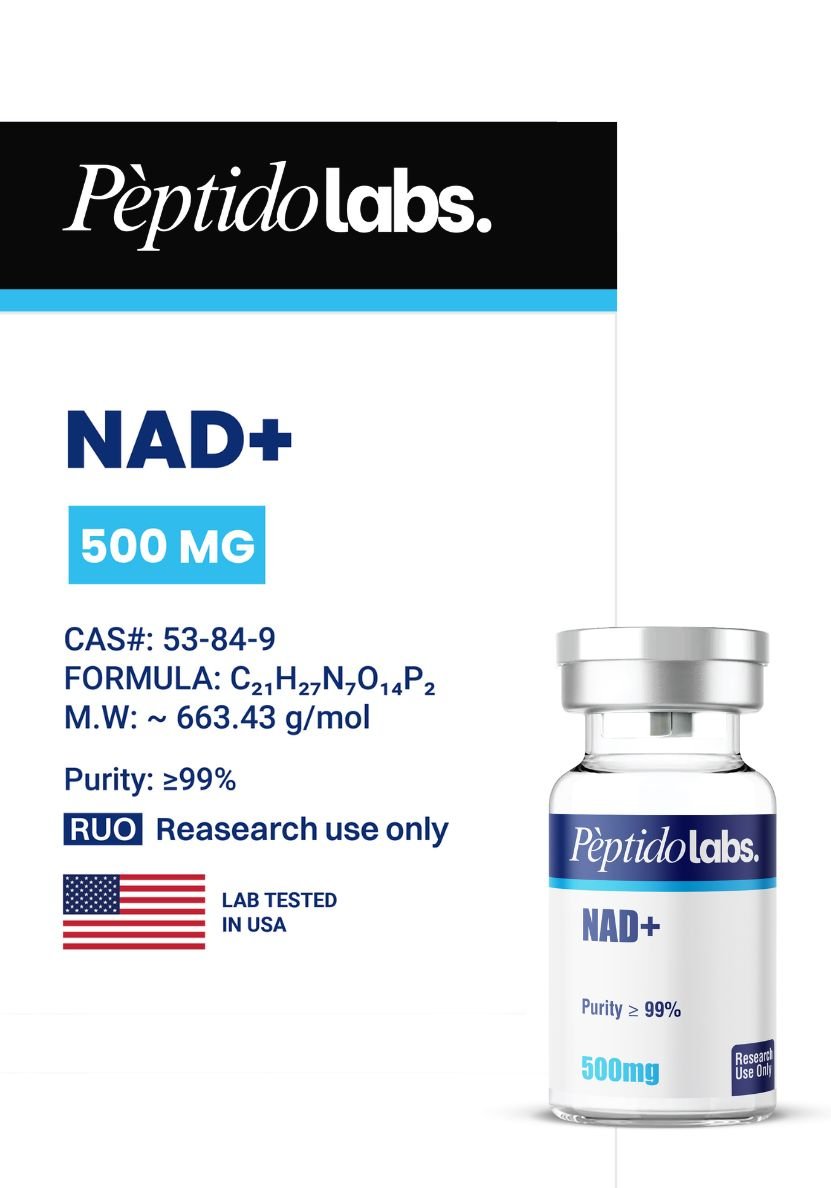
NAD+

Nicotinamide Adenine Dinucleotide

Coenzyme I

Beta-NAD

A critical dinucleotide coenzyme that activates sirtuins and supports mitochondrial function, studied for cellular energy metabolism in research models.

Certificate of Analysis

Third Party Tested by Freedom Diagnostics

99.67%
Purity
Variant
NAD+ 500mg
Lot #
Blue Cap
Labeled
500mg
Actual
508.37mg
Tested
Apr 14, 2026
Coming soon!

50%

Decline by Age 50

NAD+ levels decrease with aging

7Sirtuins

Enzyme Activation

SIRT1-7 longevity pathways

500+reactions

Cellular Processes

Essential metabolic cofactor

1,518subjects

Clinical Study

Large-scale human research

ATPproduction

Energy Metabolism

Mitochondrial function

How NAD+ Works

Third Party Tested by Freedom Diagnostics

Sirtuin Activation

NAD+ is the essential substrate for sirtuins (SIRT1-7), a family of enzymes that regulate aging, inflammation, stress resistance, and metabolism. Without adequate NAD+, sirtuin activity declines, accelerating cellular aging.

Mitochondrial Function

NAD+ is essential for the electron transport chain in mitochondria, the cellular powerhouses that generate ATP. Declining NAD+ impairs energy production and contributes to age-related fatigue and dysfunction.

Key insight: NAD+ decline creates a ‘pseudohypoxic’ state that disrupts mitochondrial-nuclear communication.

DNA Repair (PARP)

NAD+ fuels poly-ADP-ribose polymerases (PARPs), enzymes critical for detecting and repairing DNA damage. Adequate NAD+ helps maintain genomic integrity and cellular health throughout aging.

Clinical Research Results

Human studies on NAD+ and aging

📋 YANG 2022
1,518Participants

Largest NAD+ Aging Study to Date

Blood NAD+ Levels by Gender

-34.5 μmol/L

Men

-31.3 μmol/L

Women
Key finding: NAD+ levels decline significantly with age in men, especially in the 40-49 age group (β = -1.12). The decline becomes more pronounced after age 60 (β = -2.16).
📊 Study Population

Participant Demographics

Large community-based Chinese cohort

Had NAD+ measured
Validated LC-MS/MS assay

100% participants

Male participants
Gender-stratified analysis

52.6% participants

Mean age (years)
Adults 18+ included

43% participants

Research Applications

Documented effects from scientific studies

SIRT1-7

Sirtuin Activation

Essential substrate

DNA

Genomic Integrity

Damage response

ATP

Energy Production

Cellular metabolism

500+

Enzymatic Reactions

Essential coenzyme

Longevity Pathways

Sirtuin-Mediated Benefits

NAD+ activates the sirtuin family of enzymes that regulate cellular aging processes

SIRT1
Metabolism & inflammation
SIRT3
Mitochondrial function
SIRT6
DNA repair & genomic stability
SIRT7
Stress response
Cellular Energy

Mitochondrial Support

NAD+ is critical for the electron transport chain and ATP production

+95%
Electron Transport
+90%
ATP Synthesis
+85%
Redox Balance
DNA Maintenance

PARP Enzyme Support

NAD+ powers DNA repair enzymes that maintain genomic integrity

PARP1
Single-strand break repair
PARP2
Base excision repair
CD38
Immune cell signaling
Important: PARP and CD38 activity increases with age, consuming more NAD+

Safety Profile

Commonly reported effects from IV administration

NAD+ IV therapy is generally well-tolerated when administered properly. Most side effects are mild and related to infusion rate rather than the compound itself.

🤢 Common Digestive Issues
40%
Nausea
35%
Flushing/Warmth
25%
Chest tightness
20%
Headache
15%
Dizziness
10%
Abdominal cramping
⚡ Infusion Considerations

Rate-Dependent Effects

Side effects are primarily related to infusion rate rather than total dose.

  • Slower infusion = fewer side effects
  • First session often most challenging
  • Tolerance typically develops over time
📊 Discontinuation Rates

Managing Side Effects

Slow infusion rate
Reduces most AEs
Adequate hydration
Prevents headache
Break if needed
Resume after rest
 Most effects resolve by slowing or pausing infusion

 Side effects typically diminish with subsequent sessions
⚡ Precautions
Cardiac arrhythmias (rare, in predisposed individuals)
Severe hypotension (very rare)
Allergic reactions (extremely rare)
Not recommended during pregnancy/breastfeeding
💡 Researcher Notes
  • Always administered under medical supervision
  • Start with lower doses for first-time recipients
  • Inform provider of all medications and conditions
  • Stay well-hydrated before, during, and after infusion

Compound Information

Chemical and structural properties

🧬 Molecular Profile

NAD+ Structure

Essential dinucleotide coenzyme

Coenzyme

Endogenous

CAS Number
53-84-9
Molecular Formula
C21H27N7O14P2
Molecular Weight
663.43 g/mol
Type
Dinucleotide coenzyme
Components
Nicotinamide + Adenine + Ribose + Phosphate
🎯 Biological Targets

Enzyme Interactions

Essential cofactor for multiple enzyme families

Sirtuins
SIRT1-7 deacetylases
PARPs
DNA repair enzymes
CD38/CD157
NAD+ glycohydrolases
Oxidoreductases
500+ enzymes
📋 Physical Properties

Where It Stands

Stability and storage requirements

Appearance
White to off-white powder
Solubility
Freely soluble in water
Storage (powder)
-20°C, protected from light
Solution stability
Use promptly, refrigerate

All the research peptides you need, with the peace of mind and research community at your fingertips.