Plasma Concentration Studies

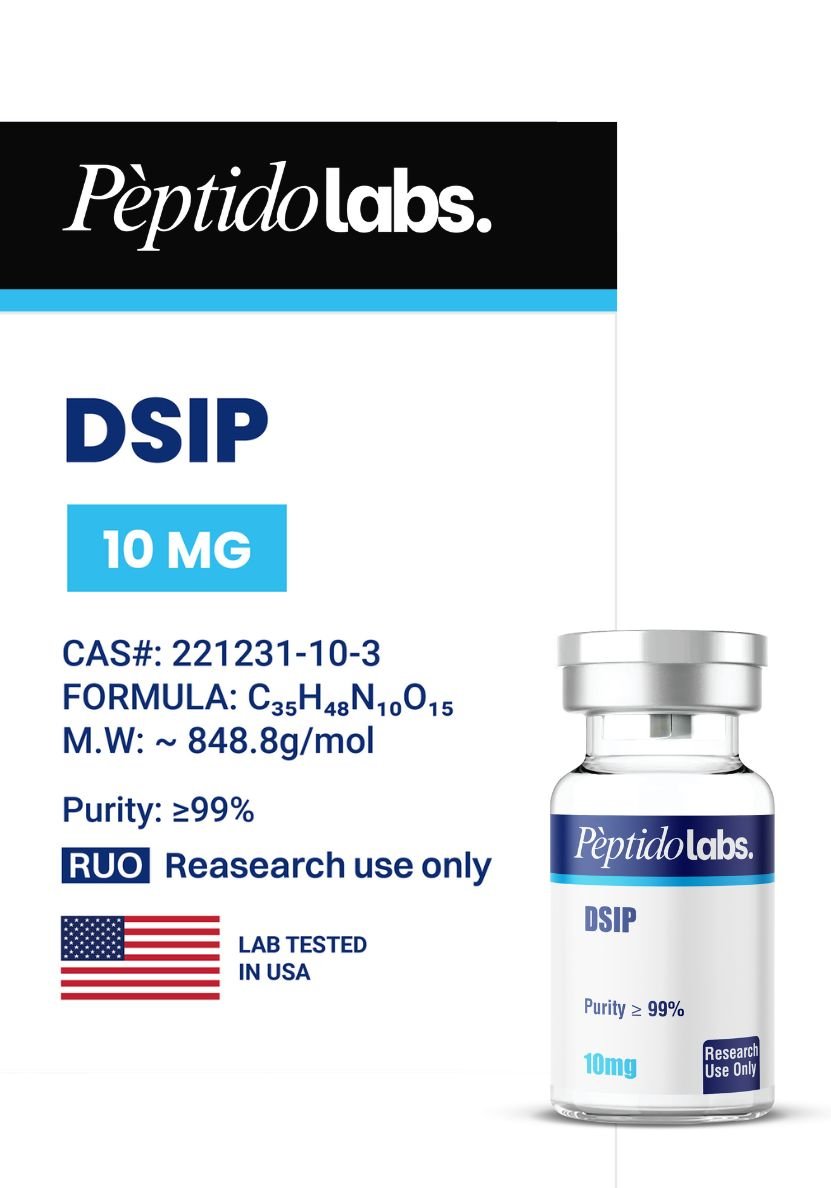
DSIP

Delta-Sleep Peptide

Emideltide

A 9-peptido acid peptide that modulates delta-wave sleep architecture and circadian rhythm signaling, studied for sleep onset mechanisms in research models. Premium Research Peptide.

Certificate of Analysis

Third Party Tested by Freedom Diagnostics

Coming soon!

59%

Sleep Increase

Within 130 minutes of administration

97%

Symptom Relief

Opiate withdrawal (107 patients)

86%

Pain Reduction

Chronic pain patients (6/7)

NoLD50

Safety Record

No lethal dose ever determined

9peptido acids

Nonapeptide

WAGGDASGE sequence

How DSIP Works

Third Party Tested by Freedom Diagnostics

The Science, Simplified

Natural Sleep Programming

DSIP is synthesized in the hypothalamus and targets multiple sites in the brainstem. Unlike sedatives, it promotes natural sleep architecture by modulating circadian rhythms, neurotransmitters, and stress-response systems — without causing dependence or tolerance.

CIRC
Circadian Pathway
Circadian Rhythm Modulation

Regulates sleep-wake cycles
Normalizes disturbed sleep patterns. Effects persist for days after dosing

OPI
Opioid Pathway
Endogenous Opioid System

Modulates pain perception. Blocked by naloxone. Supports withdrawal management.

HPA
Stress Response
Hypothalamic-Pituitary-Adrenal Axis

Attenuates stress responses. Reduces cortisol secretion. Improves stress coping.

Unique Biological Properties

Unlike most peptides, DSIP freely crosses the blood-brain barrier and can be absorbed from the gut without enzymatic degradation. It’s even present in human breast milk at 10-30 ng/mL concentrations.

Key distinction: DSIP promotes sleep without sedation — it supports natural sleep mechanisms rather than forcing unconsciousness

What Research Has Shown

Clinical trials and human studies

📋 Human Clinical Trials
59%

Increase in Total Sleep Time Within 130 Minutes

Withdrawal Symptom Relief
Opiate Addicts
Alcohol Addicts
Trial details: 107 inpatients (60 opiate, 47 alcohol) received IV DSIP. Clinical symptoms and signs disappeared or improved markedly and rapidly in the vast majority of patients.
📈 Clinical Outcomes

Response Rates Across Indications

Consistent efficacy across multiple conditions

Showed symptom improvement
Opiate withdrawal group

97% of subjects

Showed symptom improvement
Alcohol withdrawal group

87% of subjects

Experienced pain reduction
Chronic pain patients

86% of subjects
Key observation: DSIP’s effects persisted for days after treatment, suggesting it ‘reprograms’ natural sleep patterns rather than providing temporary relief.

Beyond Sleep Enhancement

Multi-system benefits observed in research

59%

Sleep Increase

Healthy volunteers

97%

Withdrawal Relief

107 patients treated

86%

Pain Reduction

6 of 7 responded

No

Exceptional Safety

Cannot kill animals

Sleep Architecture

Natural Sleep Promotion

DSIP promotes delta-wave (slow-wave) sleep without sedative effects, improving sleep quality and next-day performance

Delta Waves
↑ Enhanced
Sleep Latency
↓ Reduced
Sleep Efficiency
↑ Improved
Daytime Alertness
↑ Increased
Unique mechanism: Effects persist for several nights after treatment, suggesting circadian rhythm normalization
Stress & Mood

Stress Response Modulation

DSIP attenuates emotional and physiological stress responses while improving mood and coping behavior

+85%
Stress Reduction
+75%
Mood Improvement
+65%
Anxiety Relief
Neuroprotection

Brain Protective Effects

Research demonstrates DSIP's ability to protect neurons and accelerate recovery from ischemic injury

Cerebral Ischemia
↓ Mortality
Brain Edema
↓ Reduced
Motor Recovery
↑ Accelerated
Anticonvulsant
↑ Threshold
Pain Management

Antinociceptive Effects

DSIP modulates pain perception through interactions with endogenous opioid systems

6/7

Chronic pain patients improved

Opioid interaction: Antinociceptive effect blocked by naloxone, indicating opioid receptor involvement

Safety Profile from Research

Remarkably well-tolerated in human studies

DSIP demonstrates an exceptional safety profile. No lethal dose (LD50) has ever been determined because it has proven impossible to kill an animal with DSIP regardless of dose — a remarkable finding for any bioactive compound.

🤢 Common Digestive Issues
15%
Headache
10%
Nausea
8%
Vertigo/Dizziness
5%
Daytime Grogginess
🛡️ Safety Profile

No Lethal Dose

DSIP’s LD50 has never been determined because it has never proven possible to kill an animal regardless of the dose administered

  • Exceptional safety margin
  • No dependence or tolerance
  • Naturally occurring endogenous peptide
📊 Discontinuation Rates

Tolerability in Clinical Trials

Withdrawal studies
Well-tolerated
Insomnia studies
No significant AEs
Pain studies
Occasional headaches
 No tolerance development with repeated dosing.
 No withdrawal symptoms upon discontinuation.
 Naturally occurring peptide in human body.
🚫 Trial Exclusions

Research Considerations

Caution with ACE inhibitors (shared metabolic pathway)
Limited data on pregnancy/breastfeeding (present in milk)
Drug interactions not extensively studied
Long-term effects require more research
💡 Researcher Notes
  • Remarkably safe profile for a bioactive peptide
  • No serious adverse events reported in published studies
  • Naturally occurring substance found in human tissues
  • Present in breast milk — indicating natural safety profile

Compound Information

Technical specifications

🔬 Molecular Profile

What Is DSIP?

Naturally occurring nonapeptide first isolated from rabbit brain in 1977

Nonapeptide

Endogenous

Type
Synthetic nonapeptide
CAS Number
62568-57-4
Molecular Formula
C35H48N10O15
Molecular Weight
848.8 g/mol
Amino Acids
9 residues
Sequence
Trp-Ala-Gly-Gly-Asp-Ala-Ser-Gly-Glu
🧊 Storage Requirements

Stability Information

Handle with care to maintain potency

Light sensitive

Temperature sensitive

Lyophilized (powder)

-20°C • up to 2 years

Reconstituted

2-8°C • up to 30 days

Stability

15 minutes (plasma half-life)

📋 Research Status

Development History

First isolated from rabbit brain in 1977 by Schoenenberger & Monnier

Discovery
1977, Switzerland
Discoverers
Schoenenberger & Monnier
Origin
Rabbit mesodiencephalic ventricle
INN Name
Emideltide
Human Studies
1980s-present
Regulatory Status
Research compound

Sources & References

Peer-reviewed research

All the research peptides you need, with the peace of mind and research community at your fingertips.