FOR RESEARCH PURPOSES ONLY — This compound is not FDA approved. All data presented is from clinical trials for educational reference.
Plasma Concentration Studies
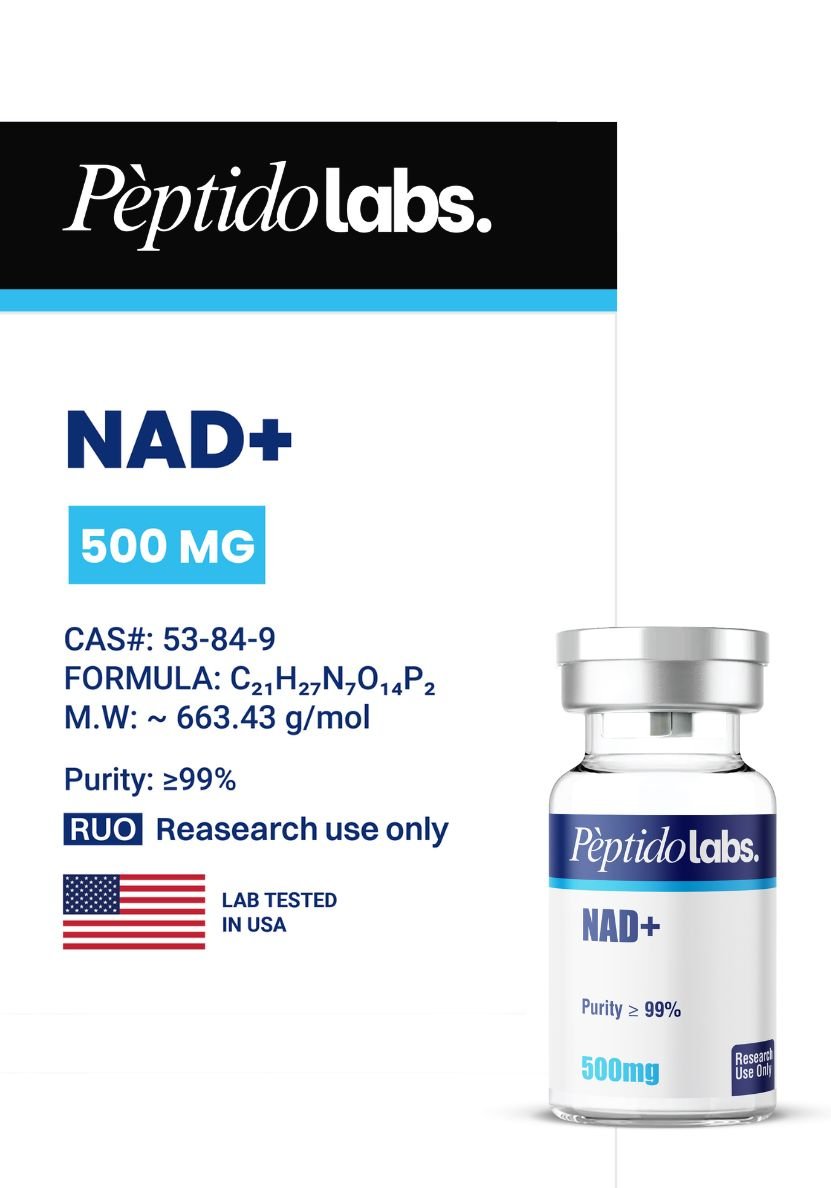
NAD+
Nicotinamide Adenine Dinucleotide
Coenzyme I
Beta-NAD
A critical dinucleotide coenzyme that activates sirtuins and supports mitochondrial function, studied for cellular energy metabolism in research models.
NAD+ is the essential substrate for sirtuins (SIRT1-7), a family of enzymes that regulate aging, inflammation, stress resistance, and metabolism. Without adequate NAD+, sirtuin activity declines, accelerating cellular aging.
Mitochondrial Function
NAD+ is essential for the electron transport chain in mitochondria, the cellular powerhouses that generate ATP. Declining NAD+ impairs energy production and contributes to age-related fatigue and dysfunction.
Key insight: NAD+ decline creates a ‘pseudohypoxic’ state that disrupts mitochondrial-nuclear communication.
DNA Repair (PARP)
NAD+ fuels poly-ADP-ribose polymerases (PARPs), enzymes critical for detecting and repairing DNA damage. Adequate NAD+ helps maintain genomic integrity and cellular health throughout aging.
Clinical Research Results
Human studies on NAD+ and aging
📋
YANG 2022
1,518Participants
Largest NAD+ Aging Study to Date
Blood NAD+ Levels by Gender
-34.5 μmol/L
Men
-31.3 μmol/L
Women
Key finding: NAD+ levels decline significantly with age in men, especially in the 40-49 age group (β = -1.12). The decline becomes more pronounced after age 60 (β = -2.16).
NAD+ activates the sirtuin family of enzymes that regulate cellular aging processes
SIRT1
Metabolism & inflammation
SIRT3
Mitochondrial function
SIRT6
DNA repair & genomic stability
SIRT7
Stress response
Cellular Energy
Mitochondrial Support
NAD+ is critical for the electron transport chain and ATP production
+95%
Electron Transport
+90%
ATP Synthesis
+85%
Redox Balance
DNA Maintenance
PARP Enzyme Support
NAD+ powers DNA repair enzymes that maintain genomic integrity
PARP1
Single-strand break repair
PARP2
Base excision repair
CD38
Immune cell signaling
Important: PARP and CD38 activity increases with age, consuming more NAD+
Safety Profile
Commonly reported effects from IV administration
NAD+ IV therapy is generally well-tolerated when administered properly. Most side effects are mild and related to infusion rate rather than the compound itself.
🤢 Common Digestive Issues
40%
Nausea
35%
Flushing/Warmth
25%
Chest tightness
20%
Headache
15%
Dizziness
10%
Abdominal cramping
⚡
Infusion Considerations
Rate-Dependent Effects
Side effects are primarily related to infusion rate rather than total dose.
Slower infusion = fewer side effects
First session often most challenging
Tolerance typically develops over time
📊
Discontinuation Rates
Managing Side Effects
Slow infusion rate
Reduces most AEs
Adequate hydration
Prevents headache
Break if needed
Resume after rest
💡 Most effects resolve by slowing or pausing infusion
💡 Side effects typically diminish with subsequent sessions
⚡
Precautions
Cardiac arrhythmias (rare, in predisposed individuals)
Severe hypotension (very rare)
Allergic reactions (extremely rare)
Not recommended during pregnancy/breastfeeding
💡 Researcher Notes
Always administered under medical supervision
Start with lower doses for first-time recipients
Inform provider of all medications and conditions
Stay well-hydrated before, during, and after infusion