
- FOR RESEARCH PURPOSES ONLY — This compound is not FDA approved. All data presented is from clinical trials for educational reference.
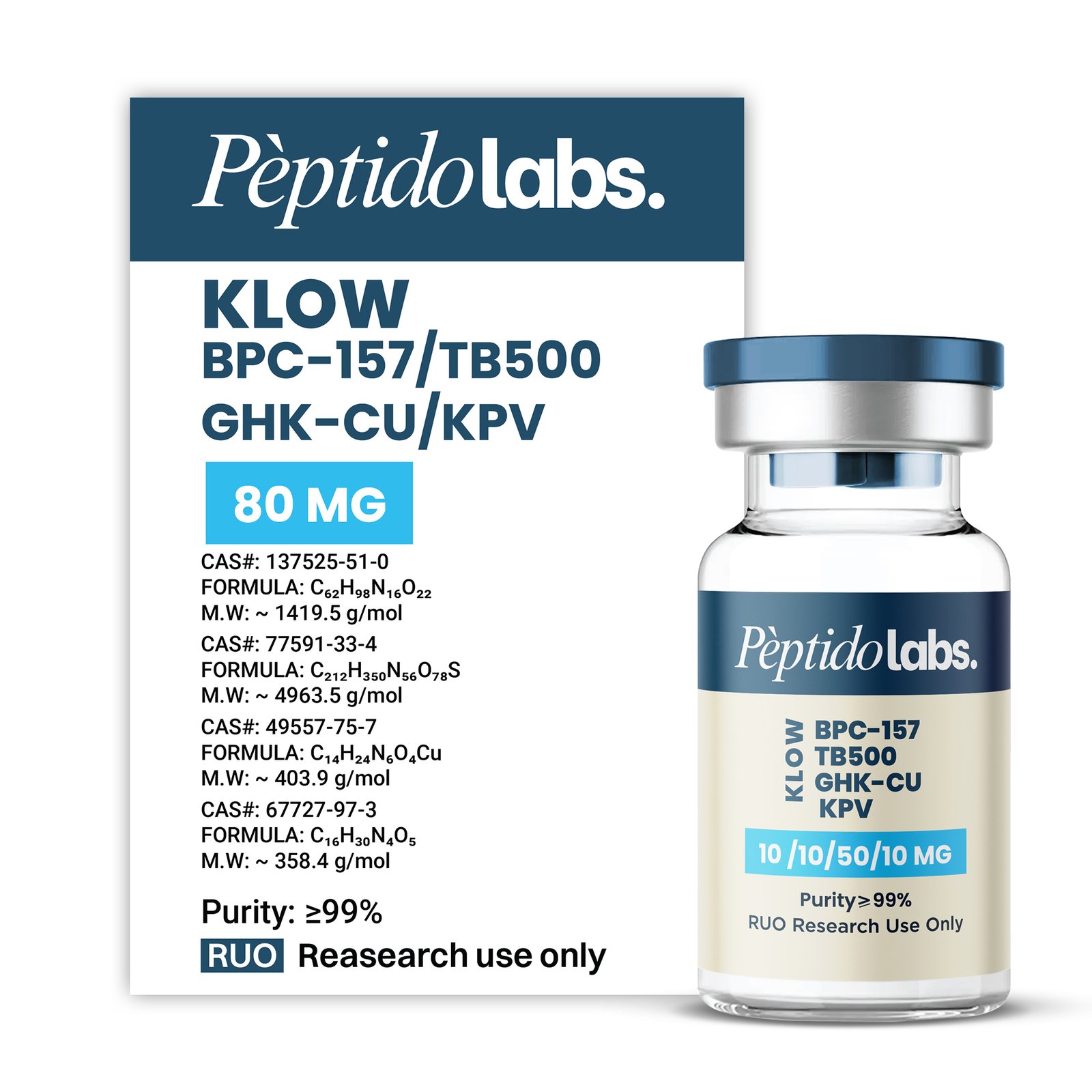
KLOW
A naturally occurring copper tripeptide that promotes tissue remodeling, wound healing, and collagen synthesis in animal and in vitro studies. Premium Research Peptide.
Certificate of Analysis
Third Party Tested by Freedom Diagnostics
70%
Collagen Increase
31.2%
Genes Modulated
3-50%
Hair Growth
12weeks
Visible Results
How GHK-Cu Works
Third Party Tested by Freedom Diagnostics
Multi-Pathway Regeneration
GHK-Cu is a naturally occurring tripeptide that binds with copper to create a powerful regenerative complex. Released from damaged collagen as an injury signal, it orchestrates healing by modulating thousands of genes involved in tissue repair, inflammation control, and cellular protection.
Upregulates 59% of affected genes activates 47 DNA repair genes suppresses inflammatory pathways
Stimulates type I & III collagen increases elastin production enhances ECM remodeling
Delivers copper to cells activates SOD antioxidant supports wound healing enzymes
Unprecedented Gene Influence
GHK-Cu affects more human genes than any other studied peptide — modulating 31.2% of the human genome.
What Research Has Shown
Summary of clinical and preclinical findings
Key Trial Results
Collagen Stimulation Comparison
Age-Related Decline in Natural GHK Levels
Safety Profile from Research
What clinical studies report
Plasma Concentration Studies
Copper toxicity is theoretically possible with extreme overuse but has not been reported in clinical studies.
- Normal therapeutic doses well below toxic threshold
- Body has efficient copper regulation mechanisms
- No cases reported in published literature at research doses
- No serious adverse events reported in any published clinical trial
- Safety profile comparable to or better than standard cosmetic ingredients
- Long history of safe use in cosmetic formulations since 1980s
Frequently Asked Questions
Common questions about GHK-Cu research
What is GHK-Cu and where does it come from?
GHK-Cu is a naturally occurring tripeptide (glycyl-L-histidyl-L-lysine) that binds with copper. It was first discovered in human plasma in 1973 and is also found in saliva and urine. The peptide is released from tissues during injury as part of the body’s natural healing response. Levels decline significantly with age, dropping from about 200 ng/mL at age 20 to 80 ng/mL at age 60.
What does the research show about GHK-Cu's effectiveness?
Clinical studies demonstrate significant benefits: A 12-week facial study on 67 women showed improved skin density, thickness, and reduced wrinkle depth. When applied to thigh skin, 70% of participants showed improved collagen production (compared to 50% with vitamin C and 40% with retinoic acid). Research also shows it modulates 31.2% of human genes, affecting over 4,000 genes involved in tissue repair, inflammation, and cellular health.
How is GHK-Cu administered in research studies?
Research has explored multiple delivery methods. Topical application (2-4% concentration in creams/serums applied twice daily) is most common in clinical trials. Injectable forms (1-2mg subcutaneous) are used in specialized research. The peptide has a short plasma half-life of 30-60 minutes but effects persist 12-24 hours due to gene modulation. Studies typically run for 12 weeks to assess visible results.
What are the safety concerns with GHK-Cu?
GHK-Cu has demonstrated an excellent safety profile across all published studies. Side effects are minimal and mild, including temporary injection site irritation (5%), skin redness with topical use (3%), and mild itching (2%). No serious adverse events have been reported in clinical trials. The discontinuation rate is less than 1% for topical use. The only contraindications are Wilson’s disease and known copper allergies.
How does GHK-Cu compare to other anti-aging compounds?
GHK-Cu shows superior collagen stimulation compared to standard treatments – 70% improvement versus 50% for vitamin C and 40% for retinoic acid. Unlike single-target compounds, it affects thousands of genes simultaneously. It’s also naturally occurring in the body, unlike synthetic alternatives, and has been safely used in cosmetics since the 1980s with over 50 published clinical studies supporting its efficacy.